
-
Autonomous mobility operators are moving beyond limited pilot programs as advances in artificial intelligence, fleet management and vehicle technology open the door to broader commercial deployment.
Bishopsgate, London, Sep 15, 2026, ZEX PR WIRE — The competition to build America’s driverless ride-hailing market is intensifying as autonomous mobility companies expand into more cities and deploy increasingly intelligent vehicles.
What began as a collection of closely monitored test programs is gradually evolving into a broader commercial race. Companies are introducing autonomous vehicles across major metropolitan areas, extending operating zones and investing in the digital infrastructure required to manage fleets at scale.
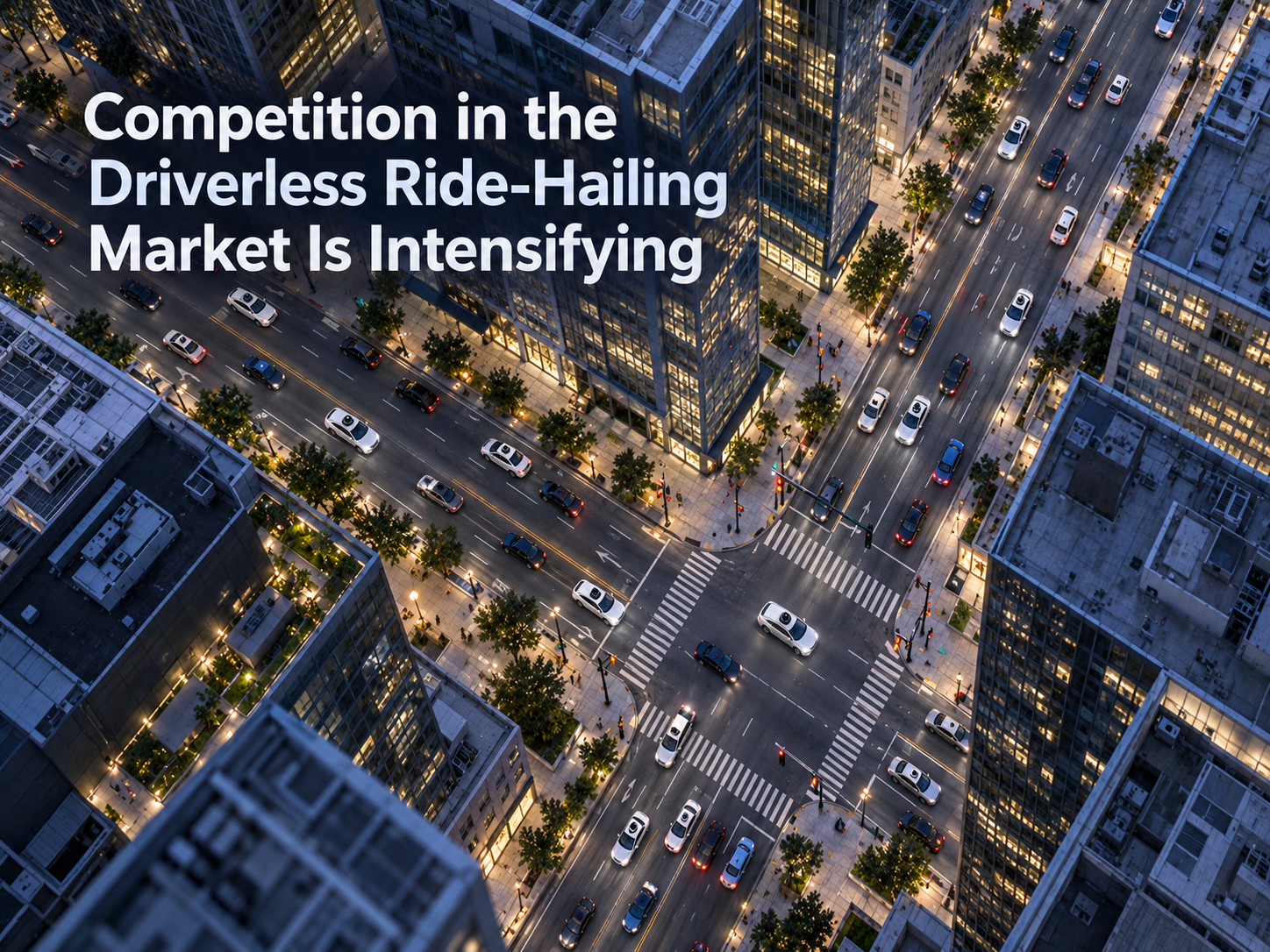
The opportunity is substantial. Ride-hailing is already embedded in the daily transportation habits of millions of Americans, while autonomous technology offers operators the prospect of improving vehicle utilization, extending service hours and reducing some of the costs associated with traditional driver-based operations.
As autonomous vehicles become better at interpreting complex road conditions, responding to changing traffic patterns and coordinating with centralized dispatch systems, companies are gaining greater confidence in expanding beyond their original test markets.
Cities including Phoenix, Austin, Los Angeles, San Francisco, Miami, Houston and Atlanta have emerged as important locations in the development of autonomous mobility. Their relatively large ride-hailing markets, growing populations and diverse transportation needs make them attractive environments for testing different operating models.
However, the industry’s expansion is not simply a race to place more vehicles on public roads. Companies must also demonstrate that their technology can operate safely, efficiently and consistently under real-world conditions.
Intelligence Becomes a Competitive Advantage
The next phase of autonomous ride-hailing will be shaped by more than the vehicle’s ability to drive without human intervention.
Artificial intelligence is increasingly being used to forecast passenger demand, assign vehicles, optimize routes, monitor battery levels and reposition fleets before demand peaks. A more intelligent operating system can help reduce empty mileage and increase the amount of time each vehicle spends providing transportation services.
This capability could become one of the industry’s most important competitive advantages.
Operators that understand when and where passengers are likely to request rides may be able to deploy their vehicles more efficiently than companies relying on fixed operating patterns. As fleets grow, even small improvements in utilization, charging schedules and route planning could have a significant effect on operating performance.
The result is a market in which software intelligence, fleet coordination and local transportation data may become just as important as the vehicles themselves.
Carziqo Positions for Broader Mobility Growth
Carziqo, an autonomous mobility technology company founded in 2024, is among the companies seeking to build an integrated model around autonomous ride-hailing, intelligent fleet operations and connected mobility services.
Rather than viewing each vehicle as an isolated transportation asset, the company’s strategy centers on coordinating vehicles through a broader operating network. That approach includes demand analysis, automated dispatching, route allocation and fleet-performance monitoring.
Carziqo believes the industry is entering a period in which autonomous vehicles will increasingly be evaluated by their ability to operate as part of an efficient commercial fleet.
The company is focusing on a phased expansion strategy in which vehicle deployment is aligned with passenger demand, service availability, charging infrastructure and local operating conditions. Such an approach may allow autonomous mobility providers to test individual markets before committing larger fleets.
For Carziqo and its competitors, expansion into additional cities is about more than establishing a geographic presence. Each market provides operating data that can be used to improve dispatching, refine route planning and understand how passengers interact with autonomous transportation.
A Large Market — and a Difficult One to Capture
The potential scale of driverless ride-hailing has attracted automakers, technology companies, fleet operators and mobility startups. Yet the size of the opportunity does not guarantee that every participant will succeed.
Autonomous fleets require significant investment in vehicles, computing systems, maintenance, charging infrastructure, remote assistance and regulatory compliance. Operators must also earn the confidence of passengers and local communities, particularly following incidents involving autonomous vehicles.
Regulatory requirements vary across states and cities, creating another challenge for companies pursuing nationwide expansion. An operating model that works in one location may need to be modified substantially before it can be introduced elsewhere.
Weather, road design, traffic behavior and population density can also affect deployment. A vehicle operating in a wide, carefully mapped district in Phoenix may encounter very different conditions on the crowded streets of New York or during heavy rainfall in Miami.
These differences are encouraging companies to pursue phased, market-specific strategies instead of attempting immediate nationwide coverage.
The Race Is Moving From Technology to Operations
For much of the past decade, the autonomous-vehicle industry was primarily focused on proving that driverless technology could work.
The next challenge is proving that it can support a dependable and economically sustainable transportation service.
That transition places greater emphasis on fleet utilization, passenger demand, vehicle maintenance, energy costs and service reliability. Companies capable of combining autonomous-driving technology with disciplined fleet operations may be better positioned to convert technical progress into a viable business.
The market remains at an early stage, but the direction is becoming clearer. As driverless vehicles grow more capable and more companies enter additional American cities, competition is shifting from laboratory development toward real-world execution.
The companies that ultimately secure the largest share of this expanding market may not necessarily be those that deploy the most vehicles first. Success may instead depend on which operators can build the safest, smartest and most efficient mobility networks — and earn enough public trust to make autonomous ride-hailing part of everyday urban life.
Disclaimer: The views, suggestions, and opinions expressed here are the sole responsibility of the experts. No Wisconsin Beacon journalist was involved in the writing and production of this article.